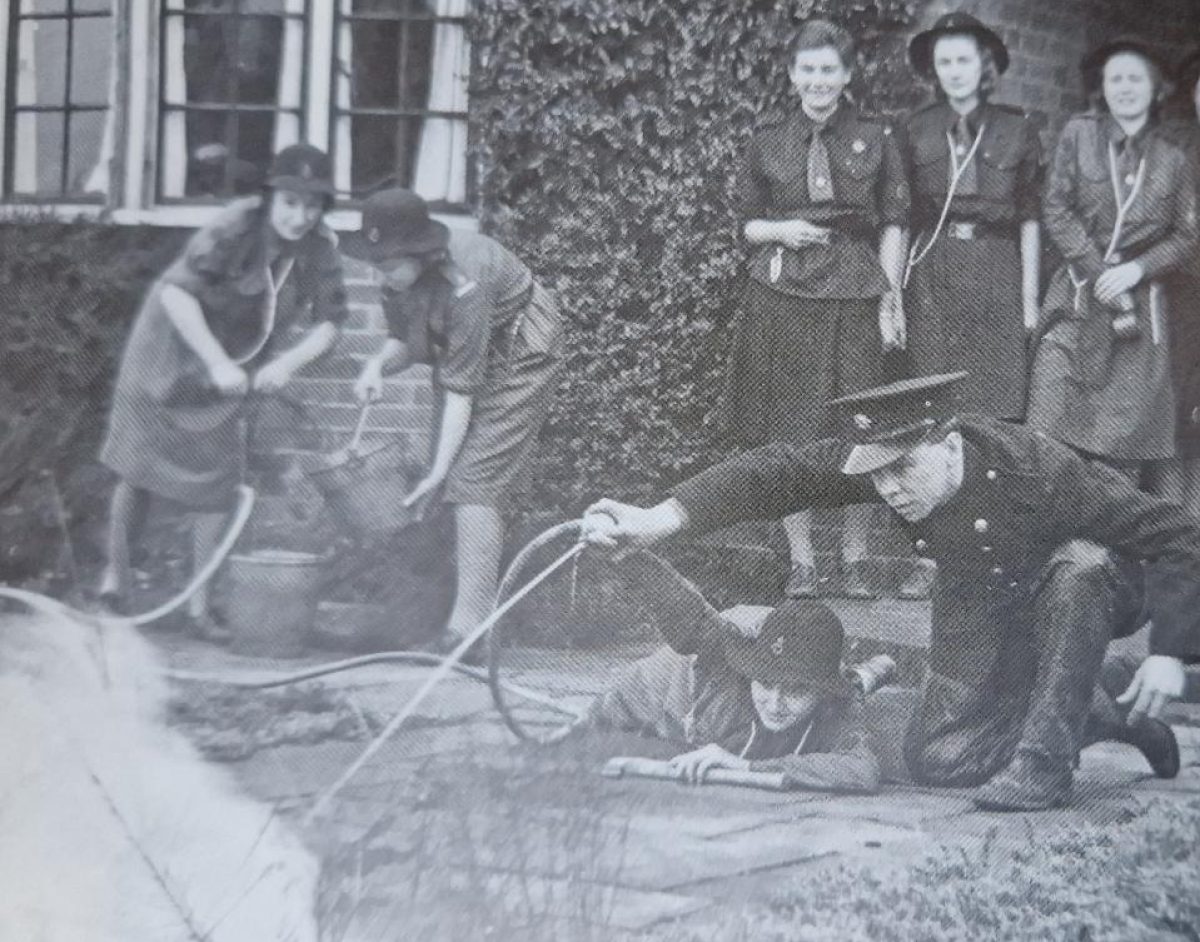
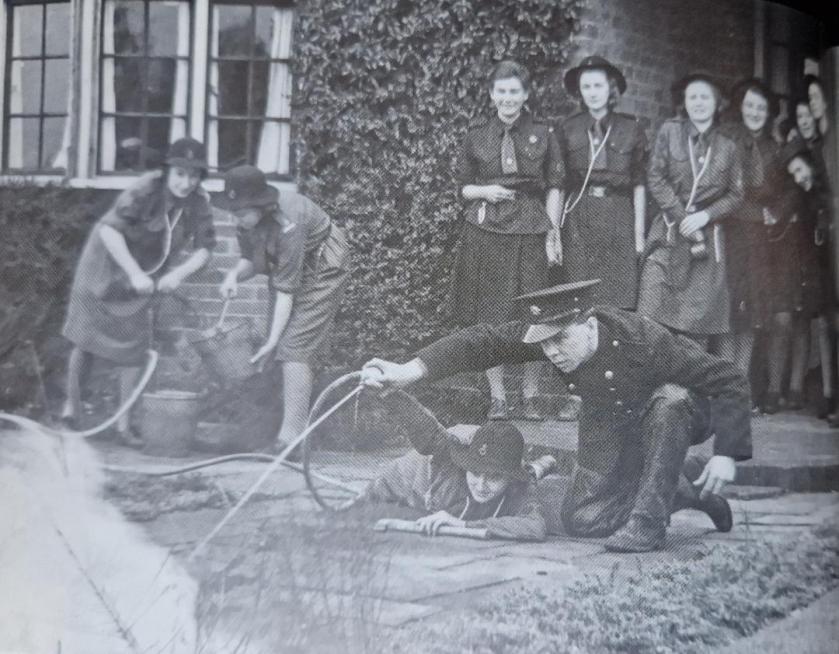
What did you do in the war, Girl Guide?
It’s a commonly asked question in Guiding. And people are often surprised to find out quite what a wide range of different and varied important work Guiding did in both the first and the second world wars, and how wide the impact of it was. As such, I have decided to set up a specific website in order to focus on this particular aspect of Guiding history, so that I can look into it in more detail than is possible on a general Guiding history site, to answer some of the many queries that are raised, and to share knowledge and enlighten current Guiding members on this fascinating subject. Despite the views of the era on women’s roles, even during World War 1 the work taken on by Guiding members was surprisingly wide-ranging, and in World War 2 even more so. As time passes and there are fewer people with first-hand recollections, so it becomes more important for us to share the knowledge with today’s members, and preserve the knowledge that we might learn from it.
I would warn that yes, there are stories of endurance, and bravery, and heroism. But there are also stories of torture, suffering, and death. I make no apology for including both – war is often described as ‘death and glory’ in that order, because there is usually a lot more death than there is glory. If you are sensitive, then you may wish to be aware of this in reading the details, especially those on the International page.

Please also bear in mind, however, that alongside some stories of endurance, bravery and heroism – there are stories which reflect the vast majority of Guiding members who in reality didn’t get the opportunity to show any of these brilliant qualities on the big stage, but who nevertheless did their bit in their own locality through far more mundane things, such as helping at first aid, fire-watching or ARP posts, maintaining a productive garden plot or keeping back-garden livestock to feed their family, keeping the family’s clothes mended or remade and knitting garments to donate to others, looking after the house and caring for elderly grandparents or young children while the adults were out working or volunteering, spending long hours outdoors in fair weather or foul collecting herbs or rosehips or sphagnum moss, working long hours in static or mobile canteens making tea and washing dishes, or pushing a pram in all weathers along the regular waste paper collection routes, or helping tend livestock or crops on a family farm in the absence of many farm workers. Most people’s war work was dull, repetitive, and was never going to result in any gallantry awards or newspaper coverage – but it was no less vital for that, and showed it’s own sort of endurance.
Although I have shared some of the knowledge I have researched and discovered, there will also be many personal experiences and memories, from individuals, or from within the covers of unit logbooks or individual diaries, which could be added. As such, I’d love to receive more information, either from people who ‘were there’, or those who have discovered their own local stories and records – and especially from outwith the UK.
On this site, the focus is naturally on the two World Wars – and the focus is mainly on the role of Guiding in Britain, although I have tried to also include information from, and relating to, other countries too. For more general information on Guiding history from across all eras, www.lesliesguidinghistory.com will be helpful.
Of a necessity, we must discuss funding. Hosting fees for websites cost money, which is why I include a button to allow people to make donations. If you have looked at this site, or used material from it, please consider using the button below to make a contribution, of pence or pounds, towards the expense of maintaining it.
 Leslie's Guide War History